Spain has always been one of my favorite countries to visit in the world and Andalusia (southern Spain), which I recently discovered in February 2024, is my new favorite region. The exotic allure of Moorish palaces against the backdrop of snow capped mountains, combined with charming winding streets and passionate flamenco music were so indescribably romantic! Also the warm vibes and the zeal for life I could feel from the locals contributed so much to the fantastic experience.
When to go: I would definitely avoid the summer months because southern Spain is notoriously hot during this period. I went with my family in early February and the weather was very pleasant – low 20s C (low 70s F) during the day and plenty of sunshine! And since it was the low season, none of the sights were crowded or hard to get tickets for. Accommodations were very affordable as well.
Planning your itinerary: Even with the tightest schedule, I would set aside at least 3 nights and 4 days to make the most of this region. We didn’t have much time but we spent a full 24 hour period in each city (Granada, Cordoba, Seville) to do all the sightseeing in full daylight and to spend the evening there as well. The brilliant Andalusian sun really lights up your pictures, and the lighting at night also brings out an otherworldly beauty everywhere you go. You won’t even need to use filters to take breathtakingly beautiful pictures in Andalusia. It’s a photographer’s dream! But of course, if you have more time, please do linger and soak in the ambiance of these wonderful cities. They’re absolutely made for it!
Getting Around: We flew into Malaga’s Costa Del Sol Airport, rented a car at the airport and drove to Granada, Cordoba and to Seville, then flew home from Seville. Having a car allowed us to have maximum mobility and flexibility in our schedule. We also carefully selected our hotels to be in the city center or close to the city center with parking (which cost between 20-25 Euros for 24 hours) because we didn’t want to drive once we got into the city. The reason why Andalusia is such a fantastic place to wander on foot is because of all the pedestrian-only streets, and the locals keep it this way by strictly limiting traffic in the city center. But if you have a reservation at a hotel in the city center that offers parking like we did, you’re able to drive in and park there. It worked out great!

What to see and do in Granada:
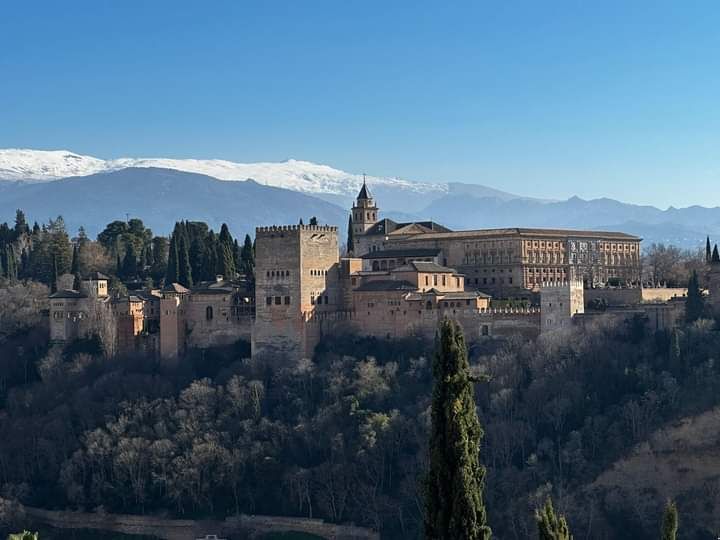
The Alhambra: The top attraction in Granada is the much celebrated Alhambra Palace, which was seat of a formidable Muslim Moorish kingdom of Al-Andalus in the 13th century. When the rest of Europe was still in the Dark Ages during this time, Al-Andalus was the center of enlightenment, where philosophers, mathematicians and other renowned scholars thrived. Then it was taken over by the Christian Spaniards in the 15th century and used as a royal palace for King Ferdinand and Queen Isabella (yes, the power couple that commissioned Christopher Columbus to find the New World). Aside from the immense historical value of this palace, just the look and feel of the palace is so exotic because it’s one-of-a-kind, there’s no other palace that rivals it in Europe except for the Alcazar in Seville. And the Moorish architectural style that utilizes advanced hydro-engineering allowed amazing fountains, waterways and ponds everywhere inside the palace, which adds a really peaceful vibe to the place. It’s a must-see! Don’t forget to make a reservation through the official website at least a month or two ahead of your scheduled visit because it gets booked up fast! Visiting first thing in the morning was great, the air was so fresh, and the crowds hadn’t slammed the palace yet in full force so we had lots of space to move around.
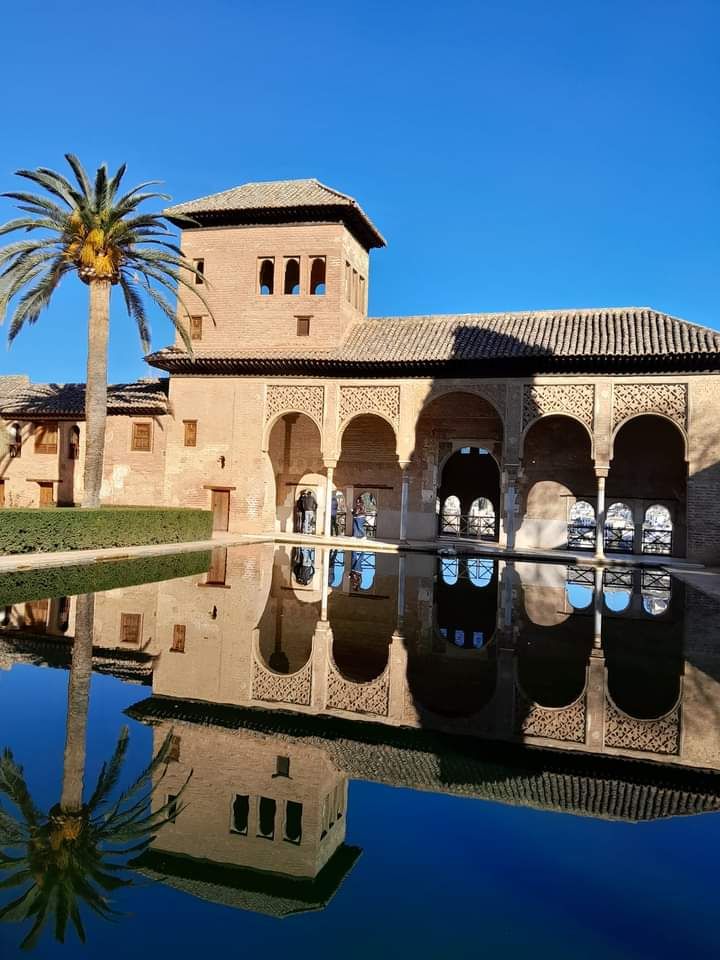
Because of its hilltop location, it’s best to take a taxi from your hotel up to the Alhambra and either walk down or take a minibus down once you’re done. The minibus is only 2 Euros per person and it does get super packed, but it’s a short ride down to the Albayzin neighborhood where a lot of good restaurants are. We found that it was hard to get bad food in Spain – wherever we went, we found excellent food consisting of the freshest seafood, meat, produce, bread, etc. Even the simplest dish like pan con tomates (literally just bread, crushed tomatoes, olive oil, with a sprinkling of sea salt) was mind-blowingly delicious. Why? Probably because every ingredient used was the locally grown and artisanally made. Spanish food doesn’t get the credit that it deserves worldwide but I am truly a fan! Don’t miss trying jamon, Spanish ham. It’s pure goodness – just looking at the picture below makes my mouth water 🙂

What to see and do in Cordoba:
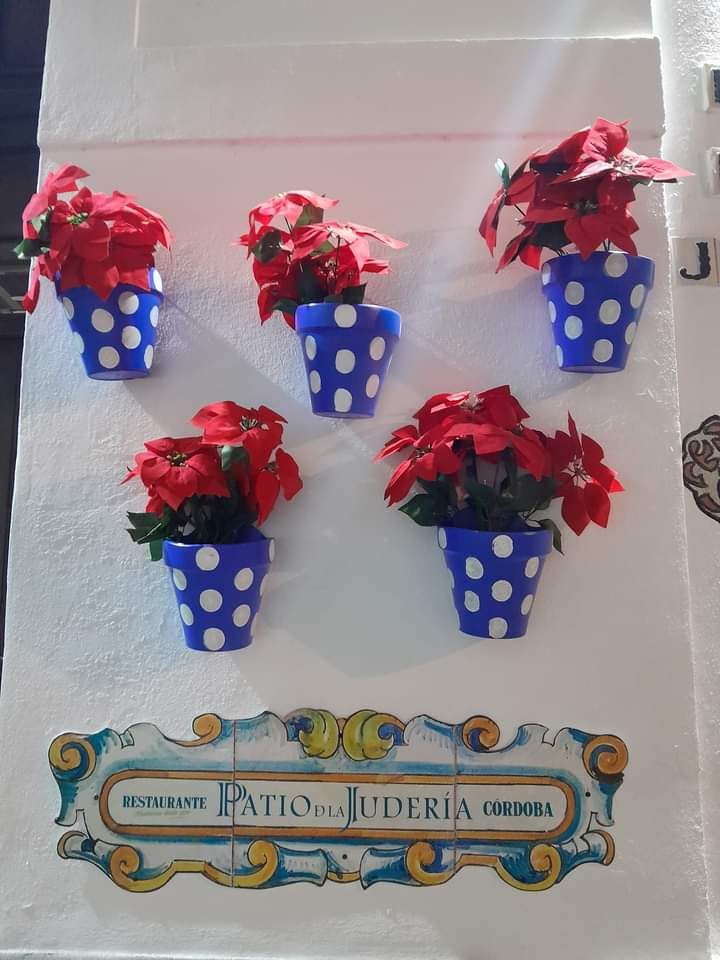
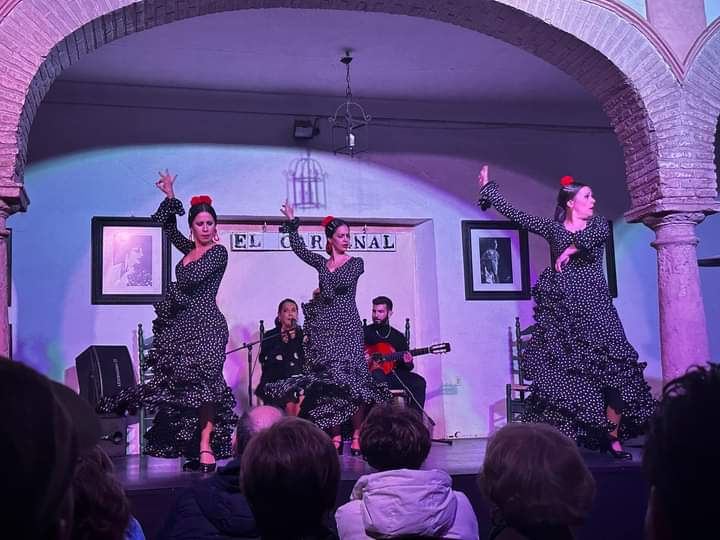
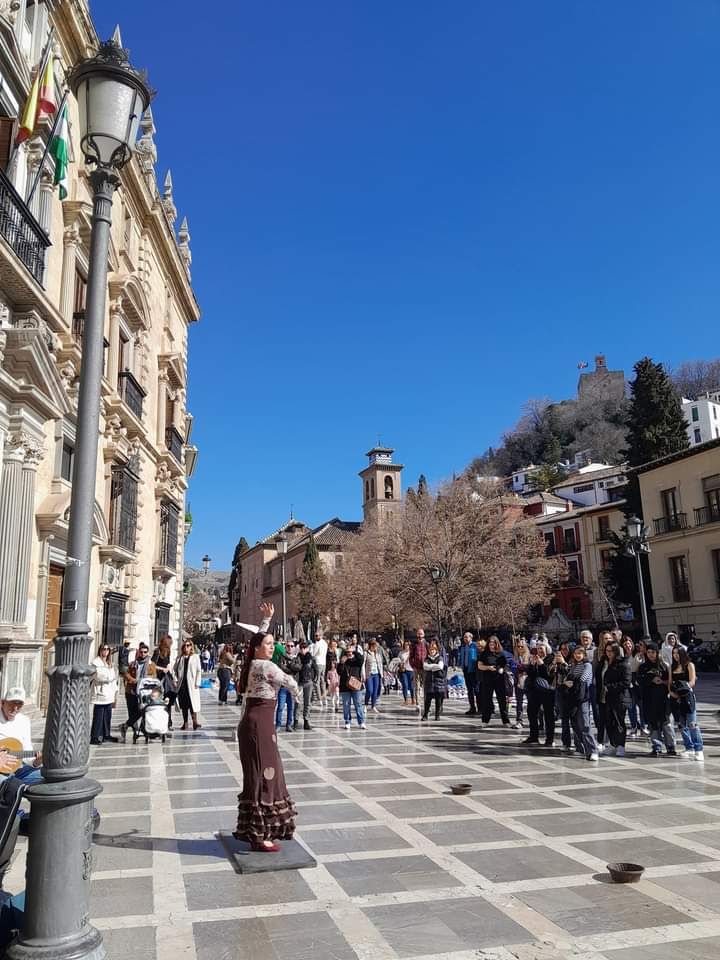
I feel like Cordoba doesn’t get as much love and attention as Granada and Seville, but honestly it was our favorite. Granada has a very small historical center that’s of interest to tourists, and outside the core the city is a sprawling university town with a lackluster aesthetic appeal. Seville is a much larger city with tons of gorgeous buildings and grand boulevards, which is really impressive. But Cordoba was very charming in an intimate way, and it was fun just to get lost in its winding, colorful backstreets, with excellent eateries as well as significant cultural monuments from the Roman and Moorish periods. It’s also where we saw amazing flamenco performances, both at a paid venue and for free on the streets! We heard that Seville has the best flamenco shows but since we were arriving in Seville on a Sunday (no shows are scheduled on Sunday nights), we decided to see a show in Cordoba on a Saturday night and we were certainly not disappointed.
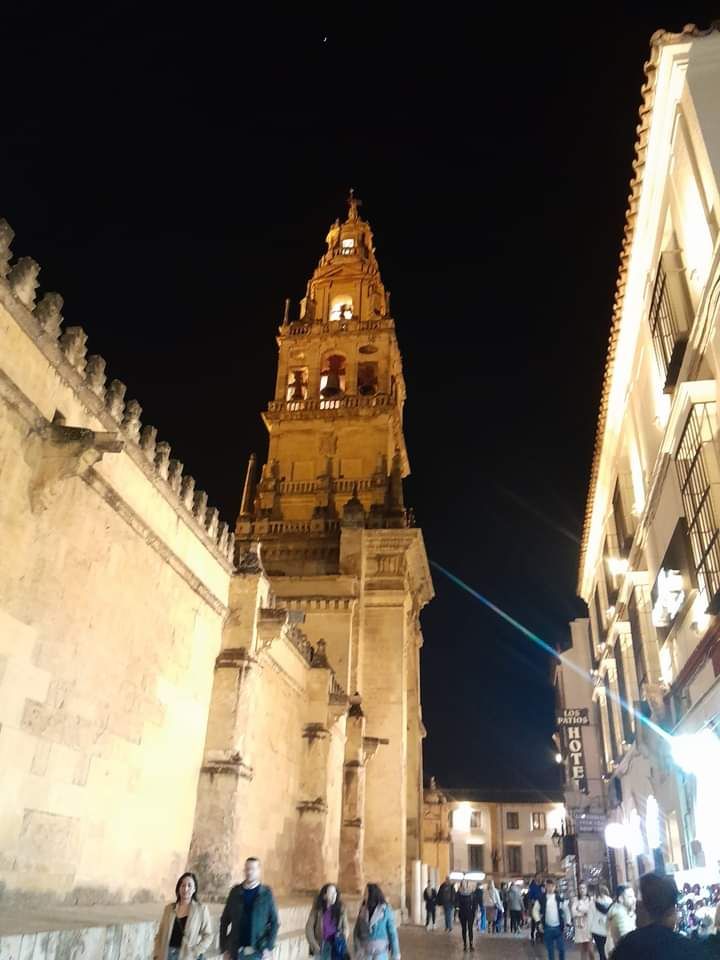
The most famous sight in Cordoba is the Mezquita – an 8th-century mosque turned cathedral which will enthrall you both in its sheer size and its unique architectural blend. This is the only structure in the world incorporating Roman, Romanesque, Visigothic, and Moorish elements, and it’s absolutely fascinating! With each wave of civilizations that thrived in this area the structure was modified to suit the taste of the rulers. You will see this in the columns and capitals recycled from nearby Roman ruins, Visigothic mosaics, Moorish Mosque now turned into a Catholic church.

What to see and do in Seville:
Last but not least, Seville! It’s the capital of Andalusia and thus is the largest and the most cosmopolitan city in the region. It has a well-serviced airport, so it’s very easy to fly in and out of Seville. I was truly impressed by its grand boulevards, monumental buildings, and joie de vivre atmosphere. It was largely traffic free in the city center and so pleasant to walk around, just enjoying the beautiful sunshine and the scenery. Seville has many museums and attractions befitting a city of this size, and you could spend days here seeing them all. But the highlight of this city for me was enjoying the sunset at the beautiful Plaza de Espana. It’s large square surrounded by buildings, towers, canals and gorgeously tiled benches in the so-called the Spanish Pavilion (each bench dedicated to a province in Spain) that were built for the 1929 international fair. It also served as a filming location for the legendary Hollywood film Lawrence of Arabia (1962). It’s great for people watching and filled with buskers performing live music. And it’s totally free and open at all hours. Don’t miss it!

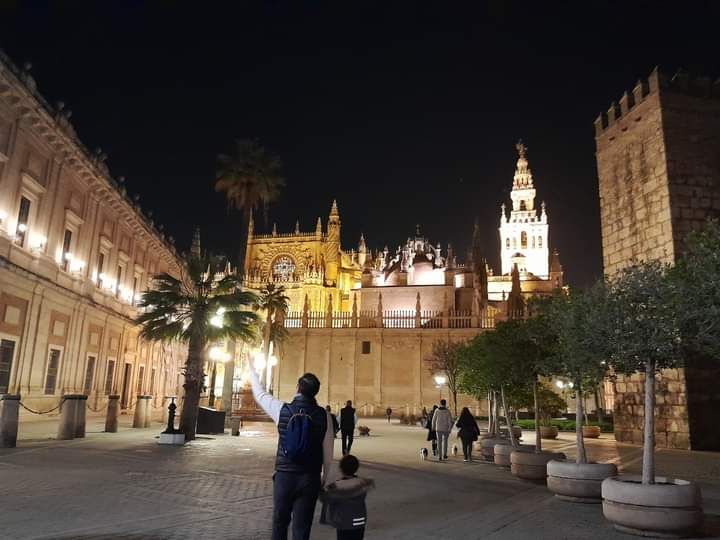
The next on the must-see list in Seville is the impressive Catedral de Sevilla. This massive 15th century structure is the 3rd largest church in Europe (after St. Peter’s at the Vatican and St. Paul’s in London) and the largest Gothic church in the world, and it was built to shock and awe anyone who laid eyes upon it. Be sure to purchase timed tickets on the official website to save yourself valuable sightseeing time because the lines can get very long. Conveniently nearby is the Royal Alcazar, which is a 10th century Moorish palace turned into a royal residence. The upper apartments are still used by the Spanish royal family today (be sure to make a reservation in advance if you’re interested in viewing the upper apartments) and it’s the longest continuously occupied palace in Europe.

That’s it! Andalusia is pure magic – I hope this article helps you get started with planning a stunning getaway of your dreams 🙂 Happy travels!

 Live And Love Your Life!